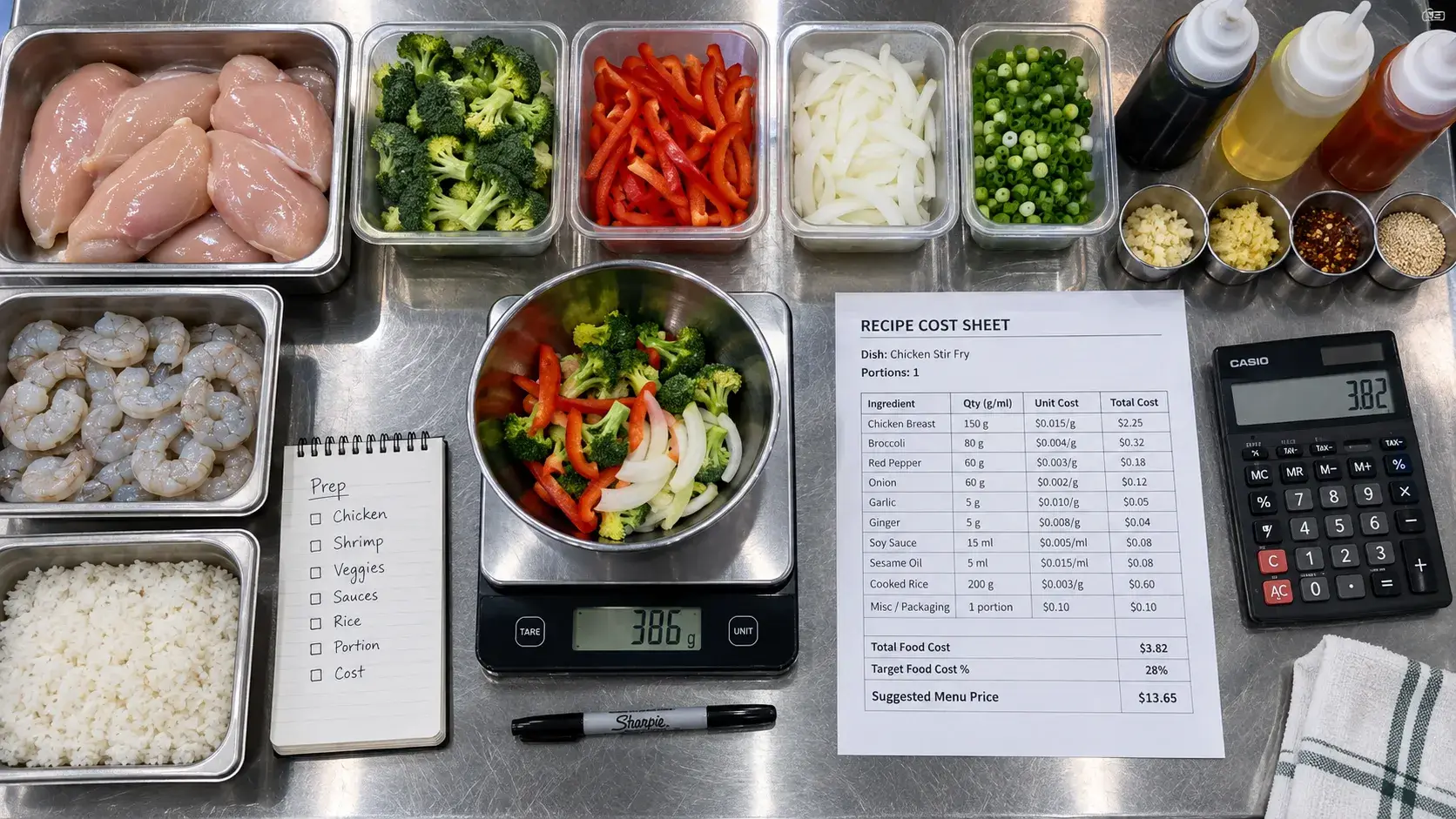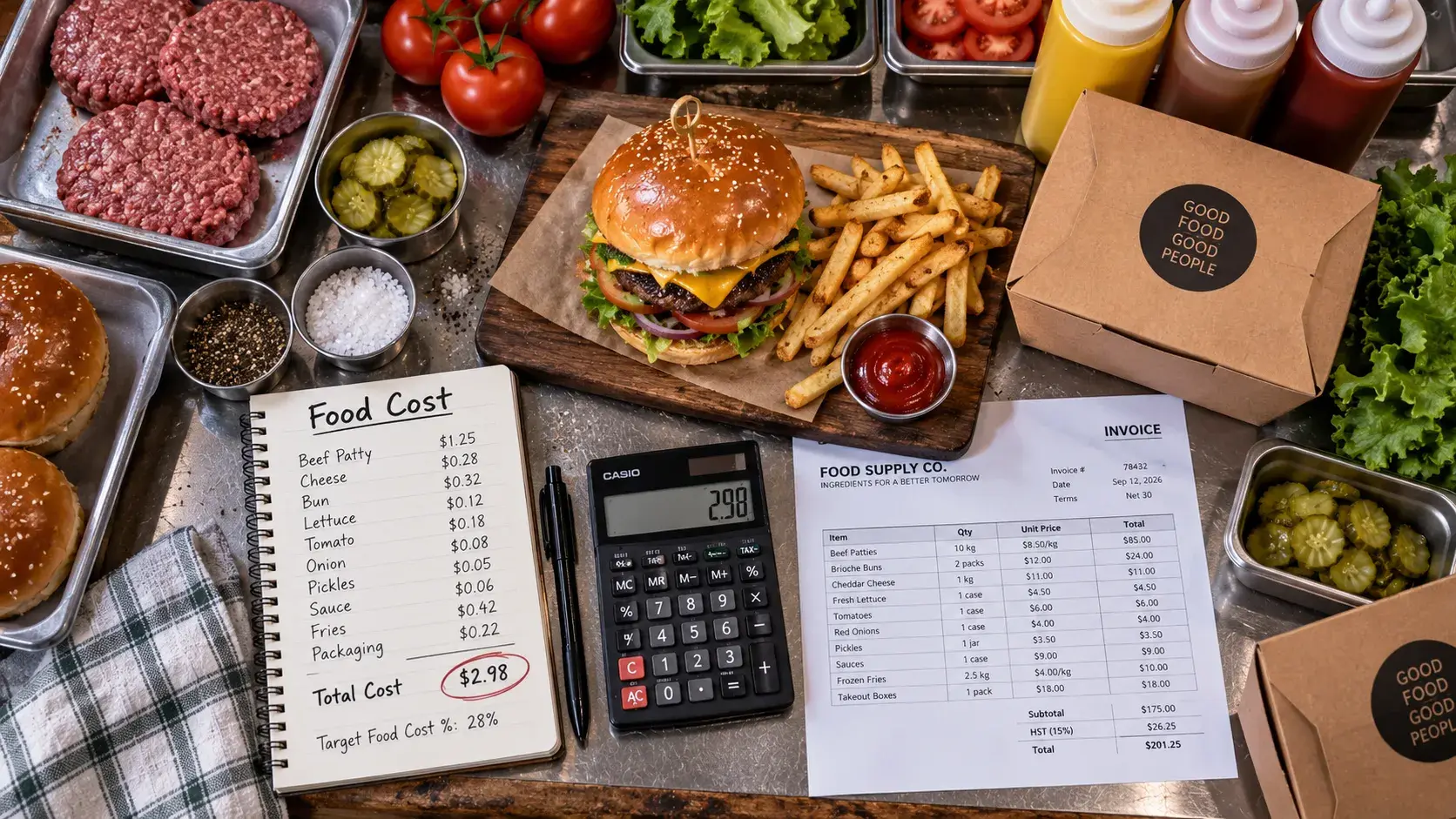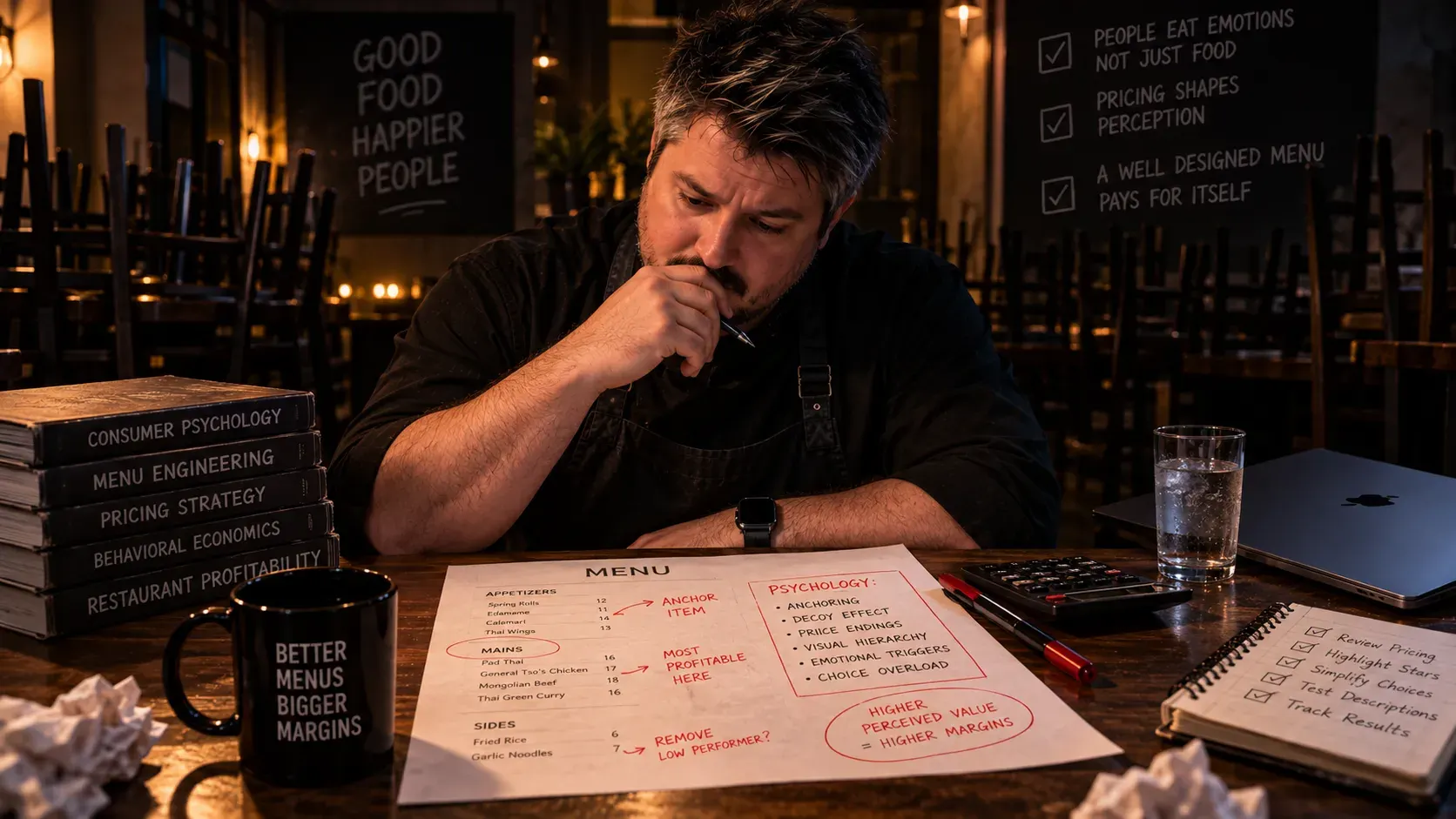
Most operators treat their menu like a grocery list with prices attached. They look at their COGS, add a standard markup, and pray the guest doesn't flinch. But the menu isn't just a list of what you sell—it is a psychological roadmap that dictates exactly how your guests spend their money before they even see a server.
Key Takeaways
Price Anchoring: High-priced items exist to make mid-range items look like bargains.
The Paradox of Choice: Limiting options reduces decision fatigue and increases average check size.
Perceived Value: Higher prices can actually drive volume if they signal superior quality to the guest's ego.
Decoy Strategy: Adding "middle" sizes or items forces guests toward the option you actually want to sell.
The False Logic of "Low Prices Build Loyalty"
There is a recurring fear in the industry that raising prices by a dollar will send regulars running to the competition. This fear is rooted in operator ego, not guest reality. When you underprice, you aren't just losing margin; you are telling the guest your product is a commodity.
Psychologically, human beings equate price with quality. If your dry-aged ribeye is priced too close to the local chain steakhouse, the guest doesn't think "What a deal!"—they think "Something is wrong with this meat." Strategic pricing uses the guest's own bias to validate their purchase.
The Power of the Anchor
Every menu needs a "decoy." This is an intentionally expensive item—perhaps a $140 seafood tower or a $95 reserve cut—that few people actually buy. Its job isn't to sell; its job is to act as a psychological anchor.
By placing a high-priced item at the top of a category, the $42 filet below it suddenly looks reasonable. Without the $95 anchor, $42 feels like a splurge. With it, $42 feels like a smart, mid-range choice. You are manipulating the guest's frame of reference.
The Science of Sizes: The Decoy Effect
If you offer two sizes of a wine pour—a 6oz for $12 and a 9oz for $18—the jump seems significant. Many guests will default to the cheaper option to feel "responsible."
However, if you introduce a third option—a "Carafe" for $32—the 9oz pour suddenly becomes the "middle ground." Or, if you price 6oz at $12 and 9oz at $15, the three-dollar difference feels like a rounding error. The guest justifies the upsell because the incremental value far outweighs the incremental cost in their mind.
"The goal isn't to sell the most expensive item; it's to make the item with the highest margin look like the most logical choice."
Cognitive Overload and Menu Architecture
Too many choices lead to "analysis paralysis." When a guest is overwhelmed by a 10-page menu, they retreat to what is safe: the cheapest item or the burger they order every time. This kills your ability to move high-margin specials.
Clean up your layout. Remove the dollar signs ($). Research shows that guests spend significantly more when the currency symbol is removed because it detaches the number from the physical pain of spending money. Use "nested" pricing (placing the price at the end of the description) rather than a column of prices that allows the eye to "price shop" down the right side of the page.
FAQ: Menu Psychology
Why should I remove dollar signs from my menu?
The dollar sign is a "pain trigger." It reminds the guest they are losing resources. Removing it allows them to focus on the flavor profiles and experience rather than the transaction.
Does putting a "Chef's Recommendation" box really work?
Yes. Guests are looking for leadership. By highlighting specific items, you reduce their cognitive load and guide them toward items that you have likely engineered for high contribution margin and high kitchen efficiency.
How often should I re-evaluate my menu psychology?
At least quarterly. As your COGS fluctuate and consumer sentiment shifts, your anchors and decoys may lose their effectiveness. Constant testing is the only way to maintain a high average check.
Stop Guessing, Start Engineering
Your menu should be your hardest-working employee. If it’s just a list of food, you’re leaving thousands of dollars on the table every month. Profitable operators don't just cook better food; they understand human behavior better than the guy across the street.
At MiseUp, we help operators strip away the emotional baggage of pricing and implement data-driven menu engineering that actually moves the needle. Stop letting fear dictate your margins.