Most restaurant owners view their menus as a list of things they happen to sell. They look at food cost as a flat percentage across the board, trying to keep every dish within a tight window of profitability. This is a fundamental misunderstanding of how a business actually functions.
Key Takeaways
Profit is found in the mix, not in the individual item cost percentage.
Strategic Hooks are low-margin items designed to drive guest frequency and volume.
Profit Magnets are high-margin anchors that capitalize on the foot traffic created by hooks.
The psychological attachment of guests to specific items creates an opportunity for margin engineering.
The Trap of Flat-Line Food Costing
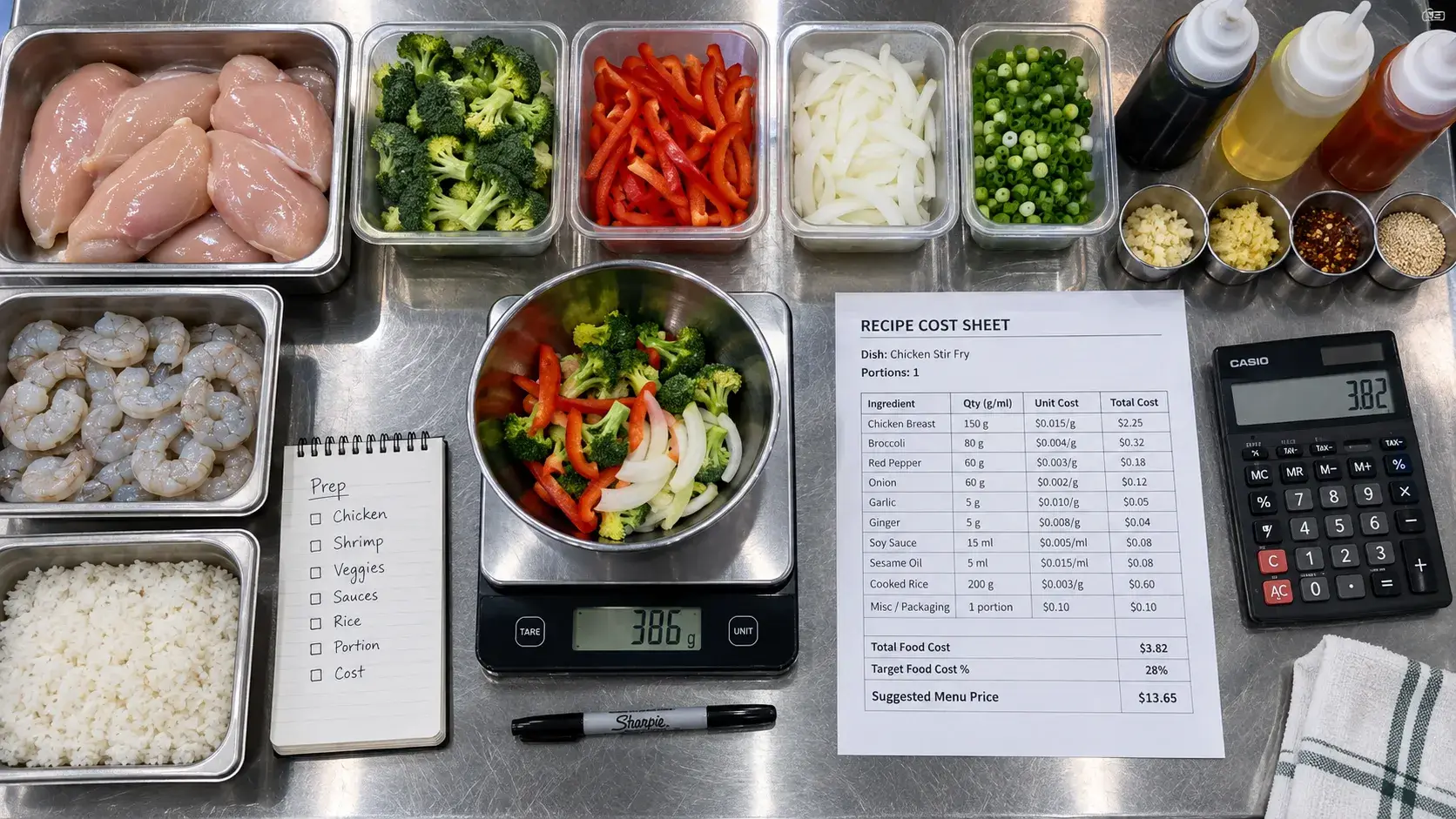
If you aim for a 30 percent food cost across every single item, you are likely overpricing your entry points and underpricing your premium offerings. This creates a mediocre menu that fails to excite the market or protect your bottom line. Successful operators understand that certain items exist solely to get people through the door, while others exist to pay the rent.
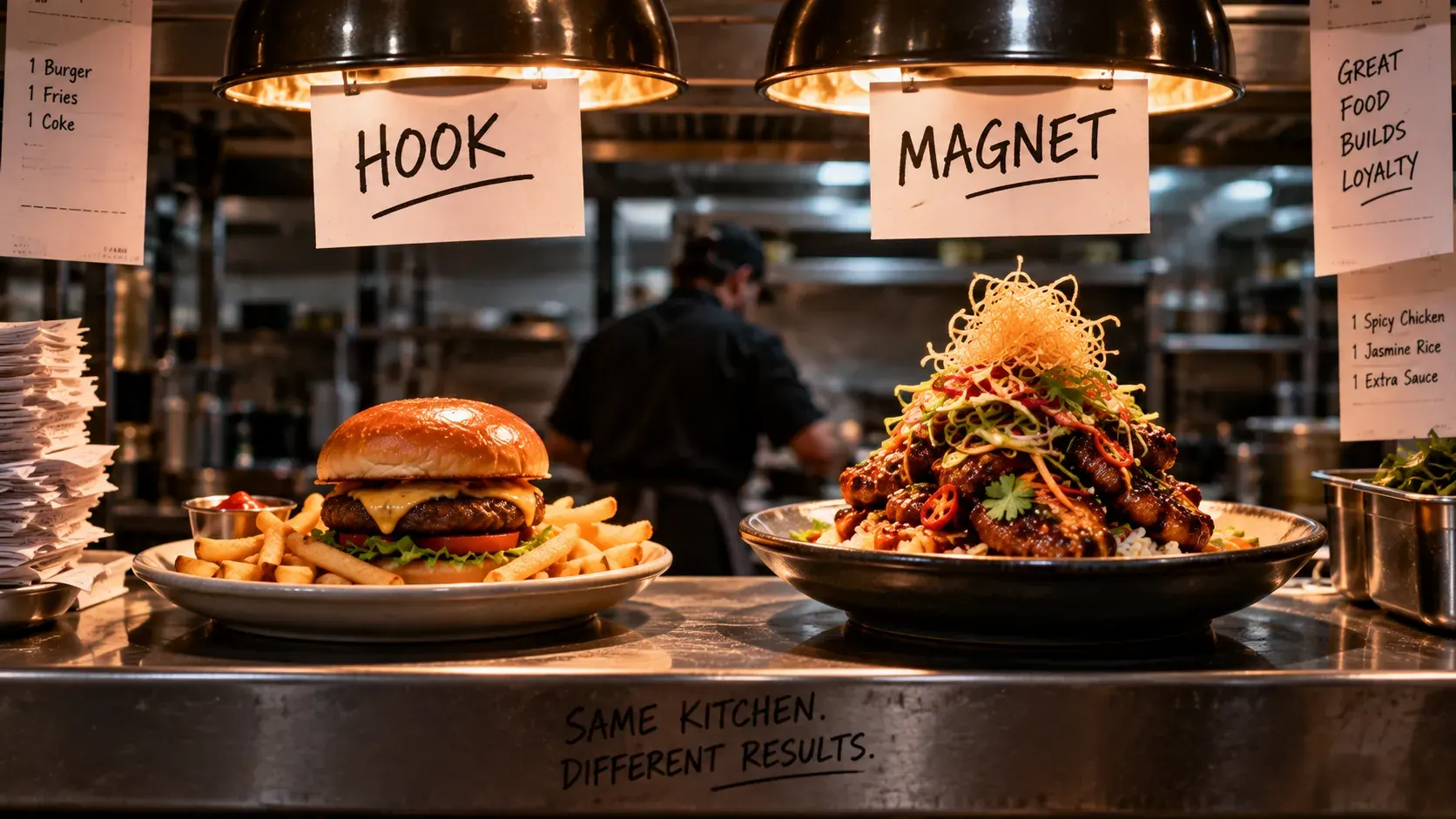
You cannot look at a low-margin burger as a failure if it is the reason your dining room is full on a Tuesday night. The failure is not having a high-margin secondary item for that guest to buy once they are seated. This is the delicate dance between the Hook and the Magnet.
Strategic Hooks: The Guest Acquisition Tool
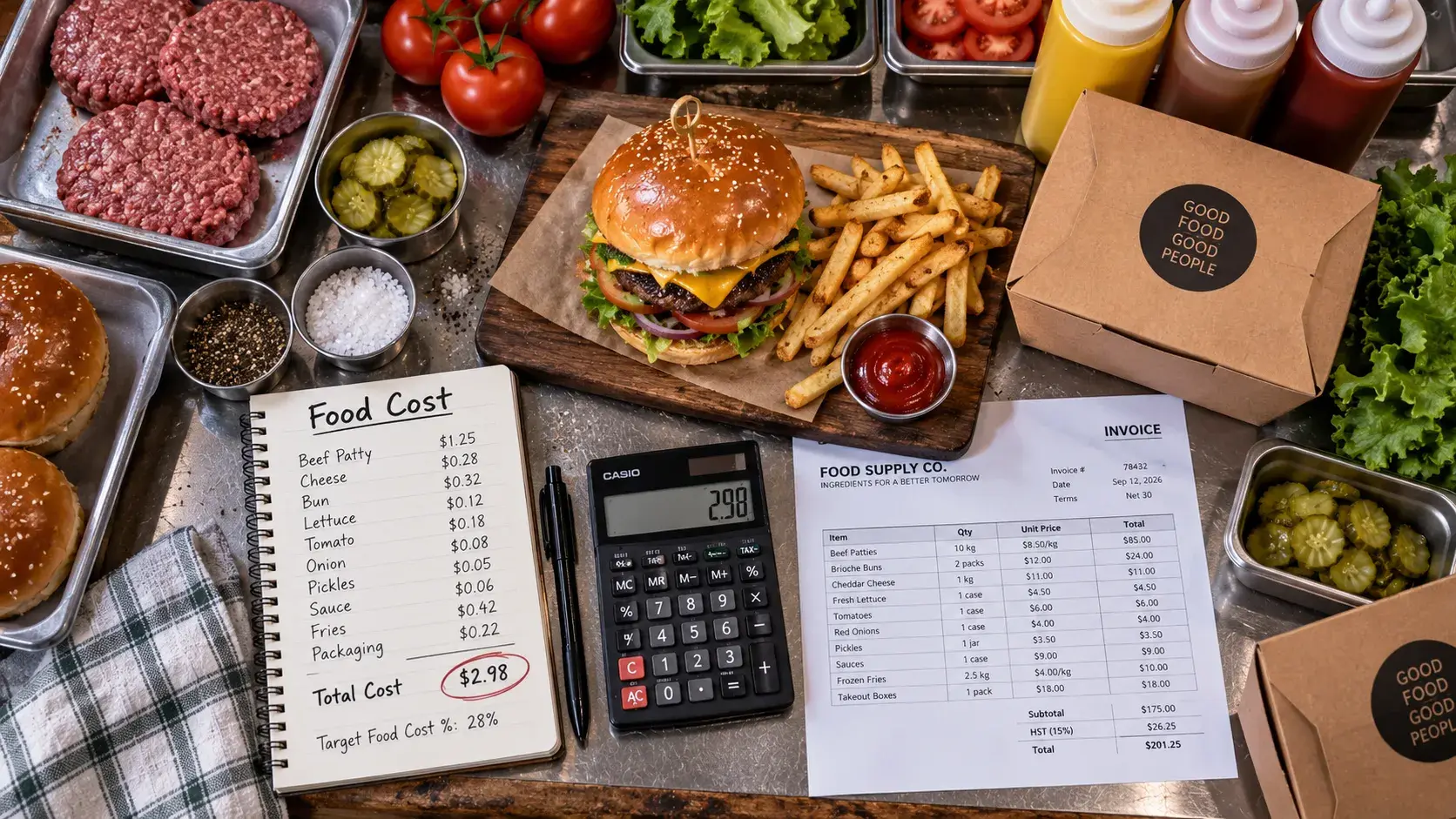
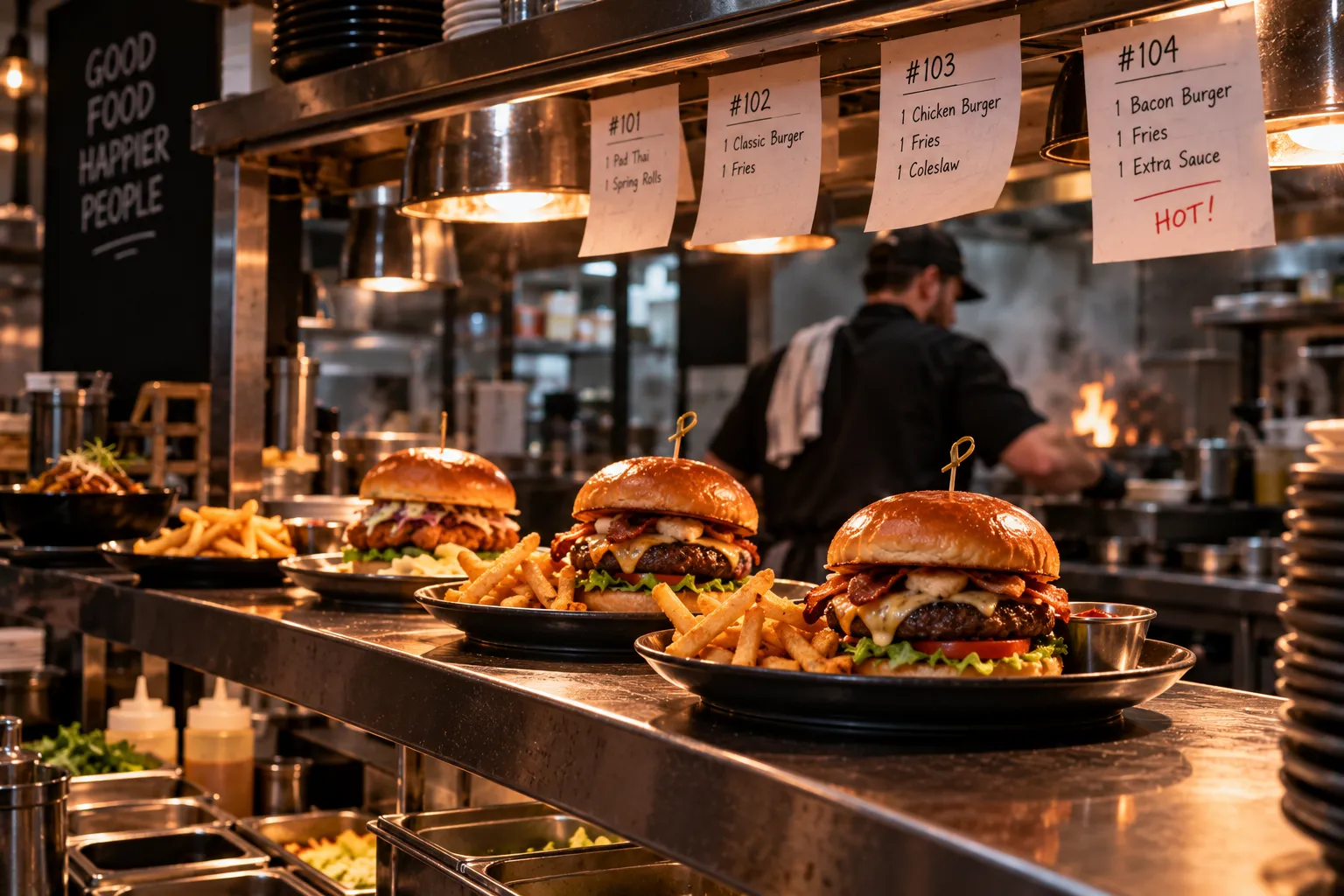
A Strategic Hook is an item with an intentionally low margin. You might be running a 40 percent or even 45 percent food cost on your signature wings or a dry-aged burger. In isolation, these items look like financial liabilities. In reality, they are your marketing budget.
The goal of a hook is volume. It creates a psychological attachment. When a guest thinks about where to go for dinner, the hook is the gravity that pulls them to your address. If you try to squeeze the margin on these items by lowering quality or raising the price too high, the gravity disappears. Your volume will drop, and your fixed costs will begin to eat you alive.
Profit Magnets: The Hidden Revenue Drivers
Once the guest is in the seat because of the hook, you need a Profit Magnet. These are items with low COGS and high perceived value. Pasta, specialty cocktails, unique vegetable sides, and desserts are classic magnets. These items should have food costs in the 15 to 20 percent range.
The math is simple. If a guest buys a 40 percent food cost burger and a 15 percent food cost cocktail, your blended margin is now healthy. The burger got them in, and the cocktail paid the bills. The problem most operators face is that they don't consciously design their menu to encourage this pairing. They leave the guest's choice to chance rather than engineering the flow.
Balancing the Financial Trade-off
To master this, you must analyze your PMIX (Product Mix) report with a critical eye. Look for your "Plough Horses," which are high volume but low margin. These are your hooks. Then look for your "Stars," which are high volume and high margin. Your job is to move guests from the hooks toward the magnets using menu placement, server training, and visual cues.
"Stop trying to make money on every plate. Start trying to make money on every guest visit."
The Emotional Connection of the Hook
Operators often underestimate the emotional attachment guests have to specific prices and portions. When you change a hook, you disrupt a guest's routine. This is why you see such backlash when a local favorite raises the price of its "staple" dish. If you must increase margin, do it on the items where the guest is less price-sensitive, like the appetizers and the drinks.
FAQ
How do I identify which items should be hooks?
Look at your sales data for the items with the highest guest counts. If people are coming specifically for one dish, that is your hook. Do not touch the quality of this item. It is the foundation of your brand's traffic.
Can I have too many hooks?
Yes. If your entire menu consists of low-margin high-volume items, you will be busy but broke. You need a 1:2 ratio of hooks to magnets to ensure the blended margin remains sustainable.
Does a hook have to be an entree?
Not necessarily. A hook can be a legendary appetizer or even a specific happy hour deal. Anything that creates a predictable pattern of behavior in your guest base can function as a hook.
Engineering Your Next Menu
Execution is where most operators fail. They have the data, but they lack the system to act on it. At MiseUp, we focus on the raw reality of your operations. We help you identify the blind spots in your menu engineering so you can stop guessing and start scaling.
Your menu should be a weapon, not a list. If you are ready to stop bleeding margin and start driving real profit, it is time to look at your business through the lens of strategic engineering.